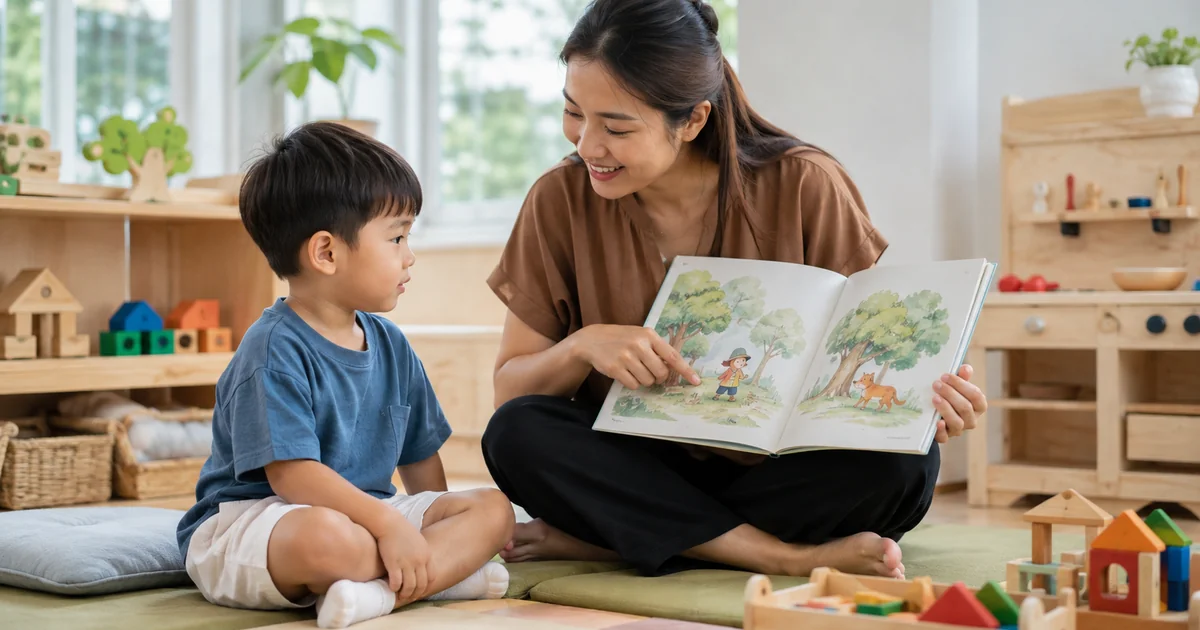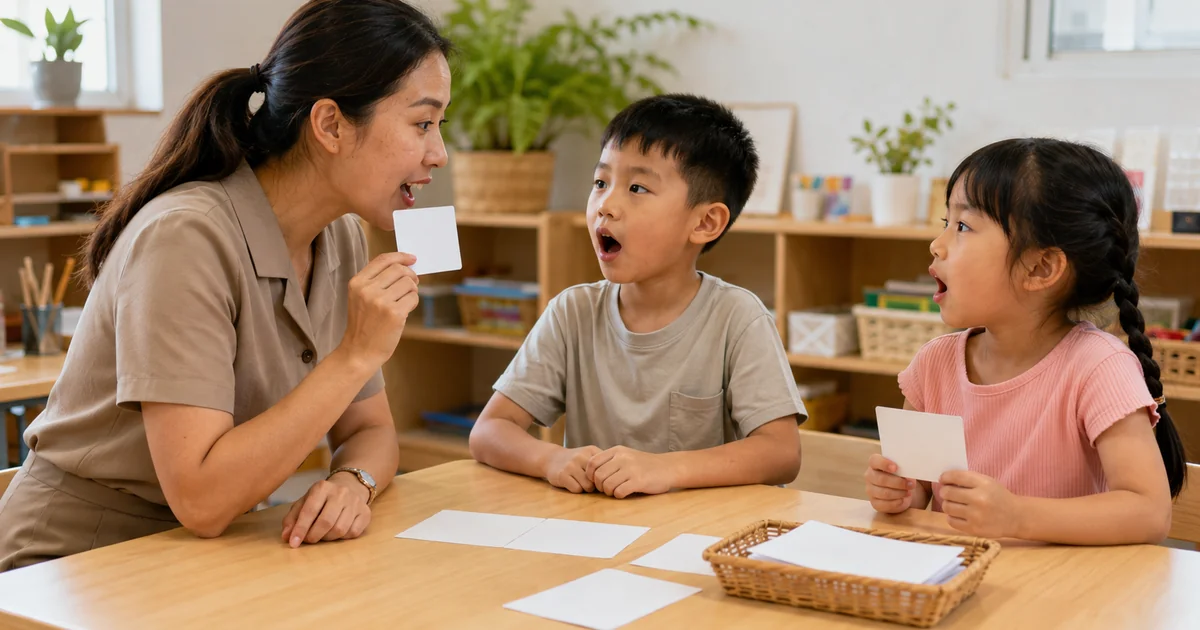



When you start thinking about having your child learn English, I’m sure many parents have this question in their minds.
“Should you start Phonics at this age?”
“The child can speak some words, but he still can’t read. What do I have to learn?”
“Our peers have already gone far; is our child going too slowly?”
Or some households may not even know where to start first.
Actually, choosing an English course for children doesn't have to be that complicated. And importantly, each child doesn't have to start at the same time, even if they are the same age.
A 6-year-old may understand English and enjoy speaking it, but still struggle with reading. Another child can read simple words easily, but is not very comfortable speaking to others. Therefore, choosing a course based solely on age may not really meet the child's needs.
Before choosing a course for your child, try to consider four simple things: Your child's age, current foundation, desired development goals, and the learning style that your child is comfortable with.
This article will help you gradually go through each topic, from kindergarten to elementary school, including the differences between Phonics, 4 Skills, and Conversation. It will also explain what each method is good for and what questions you should ask the institution before making a decision.
Don't worry about having to choose the “cheapest” option from the very beginning; learning English for children is a path that can be adapted to their growth. What matters most is choosing a starting point that suits them right now, and then watching their progress together.
Before choosing a course, consider the 4 factors of each child individually.
Actual age and developmental stages
Age can give us a rough idea of what kind of learning a child is likely to be ready for, but it should not be used as a fixed rule.
Preschoolers often learn best through activities that are fun and tangible, such as music, games, pictures, stories, movement, or following instructions. Giving them the task of memorizing vocabulary or writing long sentences may not be appropriate for this age of concentration.
As they progress into elementary school, children begin to associate sounds with letters more easily. They can start to read, write, and understand simple sentences. In middle school, they can handle more complex content, such as reading comprehension, storytelling, expressing opinions, or writing in paragraphs.
But instead of asking, “What should a 7-year-old learn?” try asking instead:
“Do you understand simple English instructions?”
“Can you read the new words yourself?”
“When the teacher asks, are you willing to answer?”
“Do you prefer learning through games or doing exercises?”
These answers help choose the English course for children more precisely than just looking at the age numbers alone. Reference work Cambridge English Qualifications for Young Learners It follows a similar approach: dividing levels based on the actual skills displayed by the child, rather than using age as the sole criterion.
Current English language skills
Sometimes parents say, “My child has no foundation,” but when actually observed, the child may already know the vocabulary from cartoons, music, or school; it just doesn’t come together in a sentence. Therefore, a child’s foundation is not just whether they can read or not.“
Some children still don't read, but they can understand simple commands like "Stand up," "Sit down," or "Open your book." That means they already have a foundation in listening.
Some people remember a lot of vocabulary, but when they encounter a word they have never seen before, they can’t read it because they have previously remembered the word as a picture rather than knowing how to combine sounds.
Another group can read and write, but when someone asks a question, they only answer with Yes or No because they are not yet accustomed to using language for conversation.
Before choosing an English course for children, try telling these stories to the teacher or staff. If the institution has a pre-course assessment, it helps to get a clearer picture of where to start so that you don’t have to repeat what your child has already mastered or jump into content that’s too difficult for them to enjoy.
The goal of families and children
The word “I want my child to be good at English” sounds straightforward, but in reality it is very broad.
Try changing it to a visual goal, such as:
“I want my children to become familiar with English from an early age”
“I want my child to be able to read new words on their own”
“I want them to dare to talk to foreign teachers”
“I want them to keep up with the lessons at school”
Or “Want to prepare the groundwork for a more challenging course”
When you know the goal, choosing a course for your child is much easier.
If your child still can't read, this might be a time to focus on sounds and letter connections. If they can read but don't usually speak, you should look for a class with more opportunities for conversation.
It’s not necessary that a child develops in just one area forever. Goals can change based on age and development. Today, they might focus on reading, but a year from now they might switch to focusing on communication.
Learning styles that children can participate in
Another thing that is sometimes overlooked is “how do the children learn and participate?” Some children go into a room and like to raise their hands, like to play games with their friends. The more people there are, the more fun it is. While others may take a while to feel comfortable speaking up; this doesn’t mean one way is better than another.
What should be considered is whether the child has used the language in the real classroom; whether there is enough opportunity for them to speak, listen, or participate in activities; and whether the teacher can encourage the child to participate.
Sometimes a course that looks great on paper doesn't suit the child's learning style, and that can also make the child not enjoy English.
Choose a starting point that suits the age group.
What should preschoolers start with?
For English language kindergarten children, there is no need to rush into starting with grammar or full-page writing.
Think about when we were children learning Thai language. We didn't start by memorizing what a subject and a verb are, but by hearing people around us say them over and over again, then we could understand and start speaking them ourselves. English is similar.
Preschoolers can start with simple songs, vocabulary, stories, movement, and activities. For example, the teacher says “Touch your nose” and the children do it, or they learn about colors through a game of picking up objects based on colors.
These may seem like games, but in reality, children are constantly connecting “sounds” with “meaning.”
The goal at this age should not be to rush through learning how many months it takes to read a few words; it should be to see if the child has become familiar with the language, whether they respond more to it, and whether they enjoy using English.
If you are looking for an English course for preschoolers, please continue reading. Guidelines for choosing English courses for preschoolers To see what activities and content are suitable for this age group.
What should elementary school children develop their skills in?
As children enter elementary school, English becomes more important in the classroom. They have to read problems, write answers, listen to the teacher, and sometimes even speak in front of the class. It is here that the foundation from previous lessons begins to be built.
Some elementary school children may still need to supplement their phonics learning because they are not yet fluent in reading new words. Some can read but do not understand long sentences; while others do well in practice but are not comfortable speaking, so it is not necessary that all elementary school children learn the same way.
“If your child reads slowly, try to see if it’s because they don’t know the sounds of letters or words.”
“If the child can only read but cannot answer questions, they may need to practice reading comprehension more.”
“If your child gets good grades on the tests, but when they meet a foreigner they don’t dare to speak, they might need to increase the space for conversation.”
Elementary school children should gradually transition from “knowing vocabulary” to “using vocabulary,” such as from knowing the word “weekend” to telling a story like “I went to the park last weekend.”
For more detailed guidance, see How to choose an English course for elementary school children
How are Phonics 4 Skills and Conversation different?
Another popular question from parents is “Should I choose Phonics, 4 Skills, or Conversation?”
The answer is “we have to see where the child is stuck right now.”
Phonics emphasizes the relationship between sounds and letters, helping children develop a foundation for trying to read and spell new words without having to memorize every word as an image.
4 Skills will look at the overall aspects of Listening, Speaking, Reading, and Writing to help children develop in multiple areas simultaneously.
The Conversation section focuses on listening and responding, such as asking questions, telling stories, expressing opinions, or using language in various situations.
Choose from the challenges that children are currently interested in.
Let's imagine that if your child knows several words but can't read when they open a book, they might need to look at the Phonics section.
If your child can read and write, but is not very confident to answer the teacher, you can add Conversation.
If you need a comprehensive foundation to support your studies at school, 4 Skills is another option.
And all three don’t always have to be separated; many courses may combine Phonics with speaking, or use conversation during the 4 Skills training.
So before signing up, be sure to ask, “What will the children actually do in this class?”
Read more at How are Phonics, 4 Skills, and Conversation different for children?
Which learning model is best suited for whom?
Once you’ve chosen the content, there’s still the question of “Which is better: group study or one-on-one study?”
Both have their advantages.
Group classes allow children to listen to their peers, wait in line, play games, work together, and learn that conversations don't only happen between themselves and the teacher.
In one-on-one instruction, teachers can adjust the speed and content more individually. For example, if a child has trouble with certain sounds, they can spend more time practicing those areas.
Use learning behavior as a criterion
If your child is a kid who sees their friends as a source of energy and likes to compete a little; a small group can make learning more enjoyable, but if your child has a significantly different background from their peers or wants to develop specific skills, a one-on-one approach may be more suitable.
However, being shy doesn’t always mean needing private tutoring. Some children gradually become more comfortable speaking when they are in a small group of friends they know well and when teachers create a relaxed atmosphere.
The important thing is to see if the child is engaged and able to continue learning. More comparisons can be found at Group or one-on-one English classes for children
Questions to ask the institution before making a decision
Information that should be clearly requested
When you go to the institution to inquire, you don't need to know a lot of technical terms; start with simple questions that are directly related to children.
“Is there any basic assessment before the course?”
“If the child has already studied it, does it have to start from the first chapter?”
“In one class, how much did the children talk?”
“If the child is not keeping up, how can the teacher help?”
“How can parents know their child’s development?”
If you're comparing where to study English for children, these answers are often more useful than just looking at the number of hours.
Try asking about the number of children in the class, the activities used, the content taught, and how the results are monitored. If it's a Phonics course, ask how the teacher helps the children learn to read new words; if it's a Conversation course, ask how much the children actually speak.
English language schools for children should be able to explain these approaches to parents without using complex jargon. If you want a more detailed comparison framework, you can read more at What should you look for when choosing an English language school for children?
For details that can be changed, such as the curriculum, tuition fees, courses, or compensation terms, you should ask ecc directly again before applying to obtain the latest information.
How can parents help to further develop things at home?
Some families, when their children start school, get the urge to say, “We have to review everything every day!” But it doesn’t have to turn the house into another classroom.
Actually, helping your child learn English at home can be a very small thing—like playing the same old song while driving, reading bedtime stories, or using English words with what’s in front of you.
Make language a routine that is not stressful.
For young children, try using simple sentences like
“Where is your bag?”
“Let’s wash your hands.”
“Which one is red?”
You don't have to spend the whole day; just a few sentences a day is enough.
Elementary school students might try telling a short story like what they ate today or where they went on the weekend, or choosing a short English-language cartoon and talking about what happened.
If your child says something wrong, you don’t have to stop correcting every word. It might scare them. Instead, try responding with a natural, correct sentence: “Yesterday I went to the park.” The parent might respond, “Oh, you went to the park yesterday!”
Your child will hear the correct sentence structure without feeling like they are being tested.
English learning for children is much more enjoyable when children know that language is a means of communication, not something that has to be done perfectly every time.
For more ideas, see How to help your child practice English at home
Frequently Asked Questions Before Choosing an English Course for Children
At what age should children start learning English?
There is no one age that is right for everyone. Younger children can start getting used to English sounds at an early age, but what is important is whether the activities are age-appropriate.
Young children should be given opportunities to listen, play, move, and interact more than just doing exercises for long periods of time. As they grow up, they should gradually increase their reading, writing, and systematic content learning.
So, instead of asking, “At what age can you start?” try asking, “What kind of education will your child get if they start now?” This will help you make a better decision.
Read more at At what age should children start learning English?
If a child is not comfortable speaking, what kind of course should they start with?
First of all, we shouldn't rush to conclude that the child cannot speak because some people can speak but still feel uncomfortable with the situation in the classroom.
Try to see if your child speaks English on their own when at home; whether they understand the instructions; or whether they need more time to think than others when a teacher asks a question.
Some children need additional vocabulary, some need the opportunity to practice with people they know, and some simply need time to adjust.
An appropriate course should have an atmosphere where children are encouraged to speak up. The teacher does not rush the answers too much, and the activities are at a level that children can handle. This builds confidence little by little. Detailed instructions for practicing can be found here. Children are not comfortable speaking English. How should they start practicing?
How can we know if a child should change the level or format of their learning?
Sometimes children may start to feel that the lessons are too easy; they can learn things quickly without even having to think about it. On the other hand, they may find the lessons too difficult to the point that they don't want to attend class.
Both of these are signs that you should talk to the teacher.
Another case is when the child's goals change, for example, in the beginning they wanted to build a foundation in reading, but now they can read and want to increase their speaking skills; it might be time to adjust the course format.
Do not judge by a single exam score; try to consider several factors together—work performance, confidence, behavior before entering the classroom, and opinions from teachers.
Read more at Signs that your child may need to change their English class
Summary and Next Steps
If you’re still not sure which English course for children is right for you, you don’t have to start with the course name first.
Start by watching “Our Child” first.
What age are you currently in?
What can you do with English?
What's the problem?
What do you want to develop first?
And what kind of learning is fun and engaging?
Preschoolers may start with sounds, vocabulary, songs, and activities that familiarize them with the language; elementary school children gradually progress to reading, writing, conversation, and using the language in more diverse situations.
Phonics, 4 Skills, and Conversation are not all better in every case. Each one serves a different function. The important thing is to choose the one that best fits what the child needs at that moment.
Before applying, be sure to ask the institution about the assessment level, the method of learning, the number of children in the class, the monitoring of development, and the opportunities for your child to use the language. Also, please check the information regarding the schedule, tuition fees, and the field of study.
And if you choose something that doesn't suit you, that doesn't mean you made the wrong choice. A child's learning can always be adjusted as they grow up and their needs change.
If you want to see the overall curriculum, you can view it here. ecc's English course for children And asked the ecc team to help with basic information, age, goals, and confirm the course, major, and latest schedule.
Because ultimately, the goal isn’t just to get the child to “learn English”; it’s to help them gradually feel that English is something that is understandable, usable, and enjoyable to learn further.