

“Is it too early for my child to start learning English right now?”
This is a question that parents often ask, especially when they see children of similar ages starting to speak English, singing English songs, or going to extra English classes. It’s impossible not to wonder if our children should start now, or if they’re too young to start, or if they’re starting too early, will it stress them out?
If you ask, At what age do children start learning English? The real answer is that there is no single age that is suitable for all children.
Children can start getting familiar with English at a young age. However, the term “starting to learn” does not necessarily mean sitting at a desk, memorizing vocabulary, or doing exercises all the time. For young children, listening to music, playing games, watching pictures, listening to stories, or following simple instructions are all considered learning languages.
What should be considered in conjunction with age is The child's readiness, the activities involved, and the goals the parents want the child to achieve during that time.
This article will help you see what kinds of English lessons each age group can start with. What signs parents can observe, and how to start practicing English at home without making it a stressful experience if your child isn't ready yet.
Age is important, but it's not the whole answer.
When choosing activities for children, age is an useful information because it gives a rough idea of what kind of activities children of that age are interested in and how long they can stay focused for. However, children of the same age do not necessarily have the same readiness for everything.
Imagine a two-year-old child who lives in the same classroom. One child might like to sing, imitate sounds, and immediately start speaking exactly as the teacher says; the other child might sit quietly for many times before starting to speak. Both are learning the same thing, just in different ways.
So if you're wondering how old your child is to start learning English, don't just look at the numbers on the calendar; try observing your child's behavior in real life as well.
Why are the abilities of each child not equal?
A child's readiness encompasses many aspects, ranging from communication and interest to adapting to new people and places.
Some children are naturally talkative and like to ask questions from an early age. As soon as they hear new English words, they want to try speaking them immediately. While others are more observational and prefer to listen first before speaking later. This doesn’t mean that the latter learn slower.
Some people can immediately play with their teachers once they get into a new class, but others may have to sit close to their parents for the first few days; they might have to see the teacher several times before they feel comfortable.
With concentration, too, some children can stay with one activity for quite a long time, while others have to switch between music, games, and movement more frequently.
So when considering teaching young children English, try asking yourself a simple question: Do they enjoy listening to songs or stories? Do they like imitating sounds? Can they follow simple instructions? And how long should it take for them to adjust to a new teacher or friend?
These answers help to choose a learning style that is more suitable for the child than simply asking, “Is the three-year-old able to learn?” British Council LearnEnglish Kids for parents Therefore, prioritize the child's readiness and interest, rather than adhering to a fixed age limit.
Goals for starting school at different ages
Another important issue, not less important than age, is “What do we want our children to get out of starting school now?”
For very young children, the goal may be simply to make English sounds sound familiar. The child hears greetings, colors, numbers, animals, or simple commands repeated over and over until they begin to understand what those words mean.
As they enter kindergarten, they may add vocabulary, short phrases, songs, stories, and simple questions like "What's your name?" or "What color is it?" while still emphasizing that children should have fun using the language.
As children enter elementary school, their goals may begin to shift towards reading, writing, constructing sentences, telling stories, and communicating in more diverse situations.
Therefore, starting English learning at an early age, rather than starting at an early age, does not necessarily have to have the same goals. Starting early does not mean that we have to teach the same material as older children, but it means that we can give children more time to “become familiar” with the language by choosing activities that are appropriate for their age.
Signs that the child is ready to start English activities
There is no checklist that needs to be completed in order to start learning English, but there are certain behaviors that can help parents notice that their child is now ready to enjoy the language activities.
Children are interested and can stay with short activities.
If your child likes music, fairy tales, watching pictures, or is interested when someone speaks English, that is a good starting point.
It is not necessary to sit still for hours. Young children may be focused on one song for only a few minutes, then get up and go do other activities, which is normal.
The key is that English learning for preschoolers should follow the natural progression of the age group. For example, there should be periods of listening, speaking, playing, and moving the body in alternating patterns so that children do not feel like they are being forced to sit down and learn like adults.
Children begin to respond to simple commands or music.
Sometimes the child doesn't say the English words out loud, but they can understand some of them already, for example, when they hear “Stand up,” they get up; when they hear “Clap your hands,” they clap their hands; or when they hear a familiar song, they can mimic the movements.
This is an example of listening-based learning. The child is gradually associating the sound with the meaning, even if they haven't yet responded with a sentence.
When parents start teaching their young children English, they don’t have to ask every time, “What does this word mean?” to check if they remember it. Try to see if the child responds better to the language. Sometimes, this small development can tell us more than just memorizing several words.
Families can schedule training sessions regularly.
Preparation isn’t just about the child; it also includes the family’s life circumstances. If the schedule during that period is very busy, with school, extracurricular activities, and multiple days of travel per week, adding another course may be too much to handle, even if the content is appropriate for the age group.
Learning a language doesn't have to be crammed. Consistency at a level that a family can actually achieve is more important. If you choose to study once a week and have time to play music, read stories, or review simple words at home from time to time, it may be more suitable for a family than organizing multiple classes so that the child doesn't have time to rest.
And if the child does not have all these signs yet, that is fine. A child's readiness is not a question of passing or failing; the child can gradually develop familiarity over time.
How to start at each age without pressure
If you decide to start, the next question is “So what kind of age should I start?”
The simple answer is to start with what the child can do first, then gradually increase the difficulty as they progress.
Pre-kindergarten and Kindergarten age
For young children, English should come in a format that feels like a part of the play.
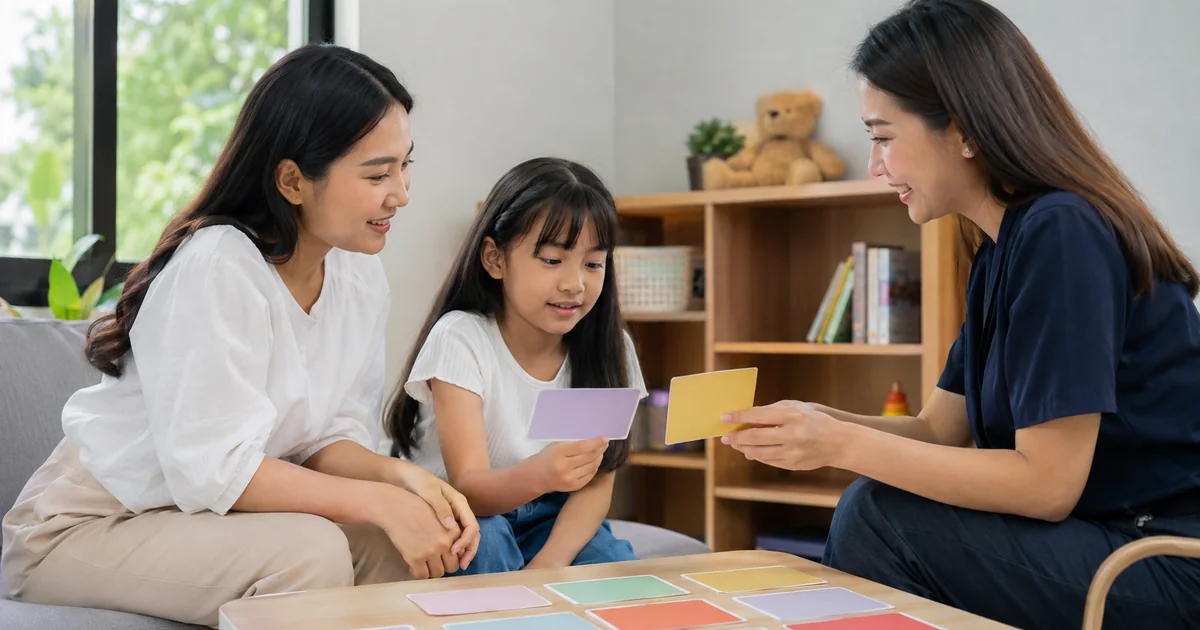
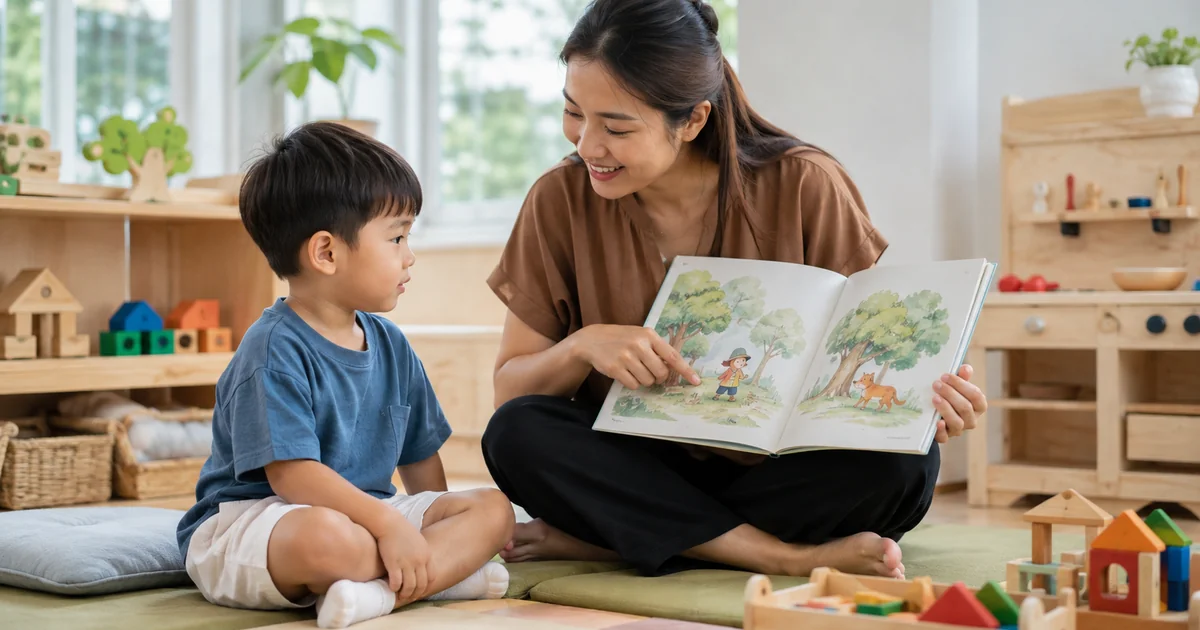
Music is a great help because children hear the same words and sounds over and over without feeling like they are reciting them. Picture books also help children infer meaning from the pictures and stories. Simple games like matching colors, pointing out body parts, or picking up objects on command help connect language to real-life actions.
If you are just starting to learn English at an early age, you don't need to set a goal that you have to be able to read or speak a long sentence after three months of studying.
Try setting smaller goals, such as making your child enjoy the class, being more willing to say new words, or starting to use some English words yourself in everyday life.
English language learning for preschoolers should be age-appropriate, providing children with space to listen, play, move, and try to speak without feeling that every word they say is being judged as right or wrong.
Early Primary School Age
As children begin to enter the elementary school age, we can add more structure.
Children may begin to associate sounds with letters, read simple words, write vocabulary, or create short sentences. At the same time, they should have opportunities to use these skills in real life, such as reading a short story and telling it to others, or learning vocabulary about food and trying to order food in English.
The point that parents should keep in mind is that learning should not become a mere exercise.
Elementary school children still need space to play with language. They can ask questions, answer them, and try new words without being corrected on every sentence. If a child reads well but doesn’t speak much, they can add Conversation activities. If they can speak but still have trouble reading new words, they may need to focus on the basics of sound and reading.
Late elementary school age
Lower-secondary students begin to use language to do more complex things, such as reading a story and grasping the main points, telling an experience, expressing an opinion, writing a text, or giving a presentation.
These days, it is possible to start connecting learning to a child's goals more effectively.
Some people want to become more fluent in speaking English to foreigners; others want to read English books; some want to keep up with their school lessons; others are preparing to enter a higher level of education where the English content is heavier.
Instead of choosing a course based solely on age, try asking yourself, “What can my child currently do, and what next steps do they want to take?”
This way of thinking helps you choose content that is appropriate for children; you don't have to rush through lessons that aren't necessary, and you don't have to start all over again if your child already has a foundation.
If you are not ready to start a course, what can you do?
Sometimes after looking at everything, parents may feel that their child is not ready to start the class yet, or that the schedule is not suitable right now. “It’s okay.”
Not enrolling in a course doesn't mean you have to stop all English learning. We can still build up a gentle familiarity at home first.
Create familiarity at home first
Starting English practice at home doesn't necessarily require buying a lot of books or setting up an extra study table.
Start with existing routines, such as when getting dressed, saying the color of your shirt, when packing, saying “Put it here.” When washing your hands, saying “Wash your hands.” Or before bed, choosing a book with lots of English pictures.
Another way is to play the same song over and over for several days. Young children often prefer familiarity, and listening to the same words over and over again helps them start to recognize sounds and start singing along.
If your child still doesn’t speak English, don’t keep asking “Why aren’t you speaking?” Listening is also part of learning; give your child time to collect the sounds and meanings first.
For older children, you could try watching short English-language cartoons, playing vocabulary games, or choosing a few easy words to use at home daily.
The key is to make English a part of life rather than another task to be completed.
If you want more ideas, you can continue reading at How to help your child practice English at home
Frequently asked questions
Is it always better to start early?
Not always. Starting early gives children more time to experience the language and build familiarity, but the outcome still depends on many factors, including the learning style, consistency, opportunities to use the language, and appropriateness for the child.
Children who start at 3 years old but learn under pressure, rarely use language, and often stop learning may not have an advantage over children who start at 6 years old but learn continuously and enjoy language.
So, if you ask what age is best for children to start learning English, the answer might not be “the earliest possible,” but rather “starting when there are activities suitable for their age and that can be continued.”
Can shy children start learning English?
Yes, shyness does not mean that a child is not ready to learn a language.
Some children need time to get to know their teachers and friends before they feel safe enough to start speaking more. If this is the case, choose a classroom that doesn’t rush you to respond immediately. Have teachers provide time for adjustment and use activities that children can participate in even if they haven’t spoken much yet.
At first, the child may listen, follow the movements, point to pictures, or say only a few short words before increasing their response when they feel more confident.
Therefore, there is no need to wait for the child to “dare to speak first” before starting to learn. Courage can also be gradually developed through good experiences in the classroom. If your child understands English but is still afraid to speak, you can continue reading here. Children are not comfortable speaking English. How should they start practicing?
Do we have to start with Phonics everyone?
It is not necessary to start with the same phonics for everyone, as the age, background, and goals of the child must be taken into account.
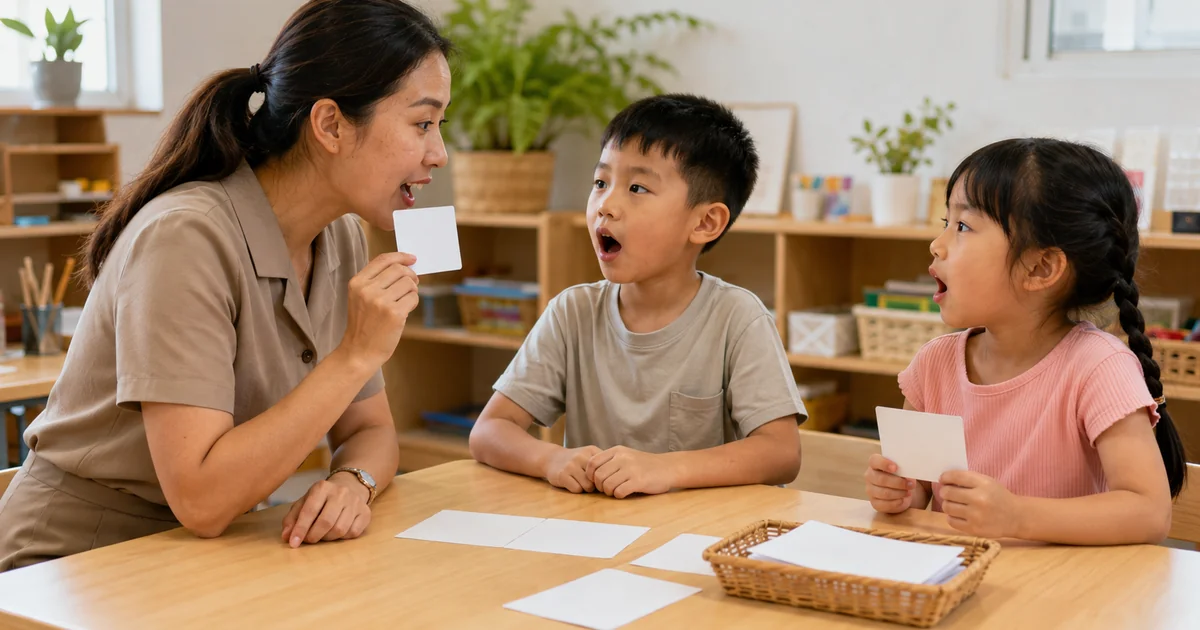
Young children who are just beginning to learn language may start by listening to songs, vocabulary words, and sounds. For children who are ready to connect sounds with letters, learning phonics can help build a foundation for reading and spelling.
At the same time, English language learning for children does not just involve reading; children must also develop listening, speaking, vocabulary, and communication skills in parallel.
If you are not sure which one your child should start with, Phonics, Conversation, or the 4 Skills, you can see more information at How to choose an English course for children based on their age
Finally, if you’re thinking, “Should I start now or wait a little longer?” There’s no need to start with another child.
Let's start with our children.
“Is he interested in English?”
“How familiar am I with the language now?”
“What kind of activities do they enjoy?”
“How much time can the family allocate?”
And “we want him to get something out of his studies during this period.”
If the answer is that you want your child to gradually become familiar with the language, start with small things. Whether it's songs, stories, or activities at home, if your child is ready to start school, then choose a course that suits their age and background.
You can view the details ecc's English course for children To look at the learning approaches for each age group and to ask the ecc team for help in determining the foundation, readiness, and learning style that is best suited for your child before making a decision.
Because a good start doesn’t necessarily mean starting earlier than anyone else, but it means bringing English into a child’s life at a time when they feel ready to learn it. It’s fun, easy to understand, and I want to keep learning.