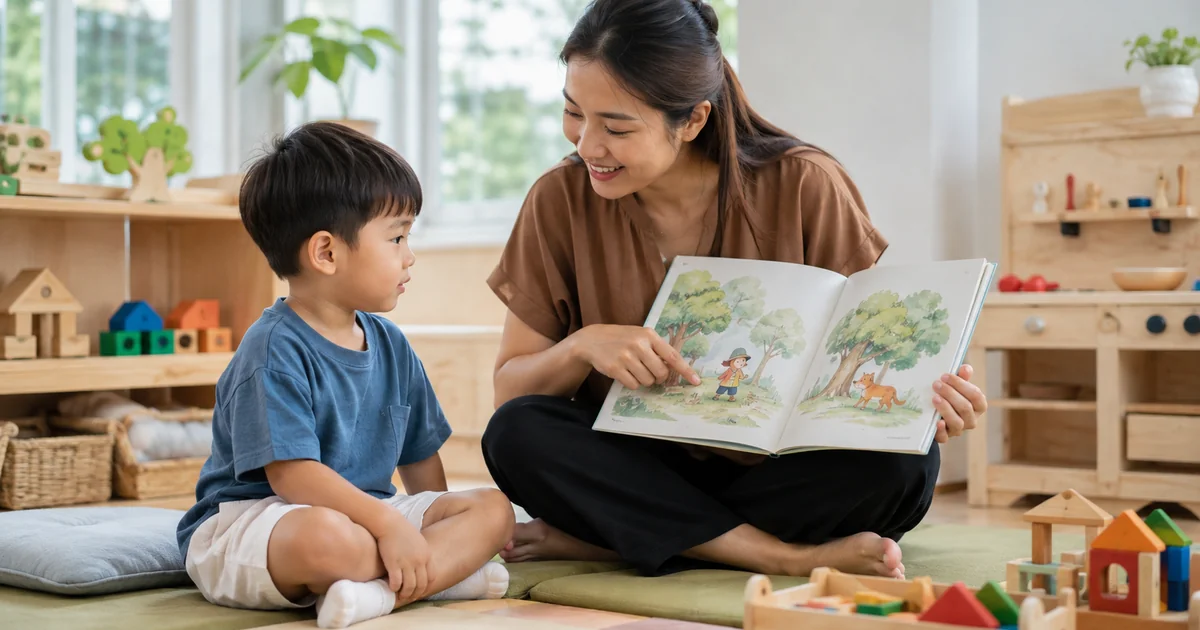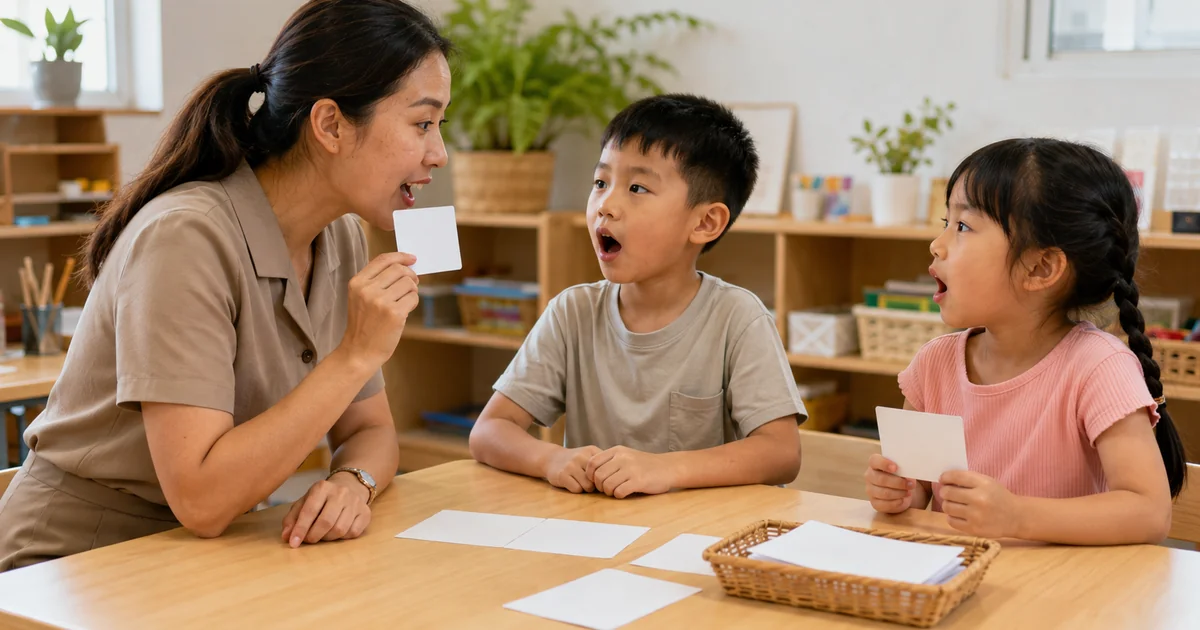



When the child enters primary school age Many homes will begin to feel that “English is more serious now.” From the beginning, in kindergarten, it might have focused on songs, games, vocabulary, or speaking. When they get to primary school, children start to face longer questions. They have to read, write, listen to the teacher, and answer questions. And some schools are starting to use English more in other subjects as well.
This is where parents often start looking. English course for elementary school children More and found another set of questions.
“Should I emphasize grammar?”
“My child can read, but why don't you dare speak?”
“Is it good to study Conversation or should I collect these 4 skills first?”
“My friend is at this level, should you join me?”
Actually, not all elementary school students need the same curriculum. Some people still need to strengthen their reading skills. Some people read and write well. But I rarely use language to speak. For some people, the basics are quite complete. and are looking to be ready for more complex content.
Therefore, before choosing a course for your child You don't have to start with the course name yet. Let's start with a simple question: What can your child do now? And is there anything that still makes him stuck? When I saw these two things clearly Choosing a course to study primary English will be much easier.
Start by looking at your strengths and areas that need to be built upon.
When parents evaluate their child's English Sometimes we may use test scores as an indicator. Because it's the easiest to see. But the score alone may not tell the whole story.
Children with close scores may have different types of problems. One person reads the question slowly. Another person can read but doesn't know the words. Or some people understand everything But when it came time to answer myself, I wasn't sure. Cambridge English Movers This is a test level for primary school children in Cambridge's Young Learners framework. It assesses listening, speaking, reading and writing separately. It reflects that each child's skills can really be developed unequally.
Let's take a look at each skill individually first. It will help you see where the English course for primary school children should take your child.
How can you listen and understand simple commands?
Start with Listening first when the teacher speaks English. How much can your child understand?
For example, if the teacher says “Open your book to page ten and circle the correct answer.” your child can follow along. Or do you still have to wait and see your friends first?
If you watch a simple English cartoon, can you roughly understand what's going on? or catch only some familiar words
Listening is a fundamental that is sometimes overlooked. Because children may be able to do exercises well. But when faced with English spoken at a normal speed, he couldn't keep up.
If your child has a problem here Children's English language development may require more activities that allow them to listen to language in a real context. It's not just about adding grammar practice.
Have you dared to communicate in short sentences?
Let's continue to see how when you have to answer a question, what does your child do?
Suppose you ask “What did you do after school?” the child might answer “Football.”
This answer is not wrong in terms of communication. Because people listen enough to understand. But we saw that The next step might be to help the child expand from a single word to “I played football.” and then to “I played football with my friends.” This is a gradual progression.
Some children have a lot of Vocabulary but are not yet accustomed to putting those words together into sentences. While some people can make sentences But I was afraid that if I said incorrect grammar it would be corrected, so I chose not to speak at all.
If you are choosing a course for your child Try asking: How many opportunities do children have to speak in class? And does speaking start at the level he can?
What is the level of reading and writing and where are the obstacles?
The term “not good at reading” is also broad.
“Some people are still stuck transcribing new words.”
“Some people can read aloud. But I don't understand the content.”
“Some people understand the But when I answered questions in English, I couldn't write them.”
Early elementary school children may still need more time connecting sounds to letters and creating vocabularies. In English, late elementary school students often have to deal with longer texts, capturing Main Ideas, finding specific information. and writing answers that are more logical than before
Take a look at your child's work or worksheets and ask if they are stuck on “reading words.”
“Understand the meaning” or “Compose the answer”
These three require different training methods. And it will help us choose English courses for primary school children more accurately than before.
Learning goals found in elementary school children
When you see the basics The next step is to determine Where do you want to take your child during this time? There is no need to set goals that span many years. Just the “next goal” that you can see in the picture is enough.
Continuously build a foundation
Many children in early elementary school are still building their foundations, including sounds, vocabulary, basic sentences, reading, and writing. During this period, there is no need to rush to skip the basics because you see other children going further.
If your child still has difficulty reading new words on his own Tightening up the sound might make future reading easier.
If you know a few words You need to increase your vocabulary through topics close to you, such as home, school, food, sports, hobbies, or daily routines. The goal is to make things gradually connect together, not by knowing the words in isolation, but by beginning to use them in sentences.
Use language in the classroom and daily life
Some children already have the basics. But English is still more in books than in real life.
“Can do the Fill in the blank exercise.”
“Choose the grammar answer.”
“Read it”
But when I say “Can I borrow a pencil?” or tell you what happened today but I can't remember.
If it's like this The goal may change from “learn more” to “use what you know more.”
Learning English during this period may include Q&A activities, Role Play, storytelling, pair work, or using language in immediate situations.
The more children feel that they have learned this word and can actually speak it. English will begin to mean more than test scores.
Be prepared for more difficult content.
When entering English for elementary school children Content often becomes longer and more complex.
Children may need to read several paragraphs of the article. answer logical questions Write a story Express opinions or use multiple forms of grammar in the same work.
This point does not necessarily mean that “Study harder in advance” is always important. See if the original foundation is ready for the next step. For example, if you read a short story and understood the meaning. Adding a longer reading chapter makes sense. But if you're still wasting time reading each word Adding a long article can be tiring without being as helpful as it should be.
Children's English language development should therefore proceed from the base they have. Not just looking at it. What grade should I study according to others?
Choose a course of study that is consistent with your goals.
Once you know your strengths, sticking points, and goals, names like 4 Skills, Conversation, or Phonics will begin to have meaning.
When should you focus on 4 skills?
If you want your child to develop all-round language Learning that connects Listening, Speaking, Reading and Writing can help children see the relationship between the skills. For example, start by listening to a story. Then answer the questions. Read related stories Then try writing short opinions, so children do not study each aspect separately.
The 4 Skills approach may be appropriate when your child's foundation still needs to grow in many areas at the same time. Or want to create a more balanced base for school use? But you should ask: In one lesson, how is each skill actually used? Because the term “complete 4 skills” alone may not tell the proportion of all activities.
When should you increase the opportunity for conversation?
If your child can do the exercises Fairly readable But when asked, he was quiet. Or answer in sentences and it takes a long time. You may need to add more space for speaking. This doesn't mean that you have to stop reading or writing and just study Conversation.
But there should be increased opportunities for children to use what they know immediately, such as
“Question and answer”
“Tell a story”
“Describe the picture”
“Role Play”
“Comment”
or ”work with friends”
Conversation helps children practice both listening and thinking in real time. This is different from doing exercises where you can stop and think for a longer time.
When should you go back and reinforce the basics of reading sounds?
There are some elementary school children who remember a lot of words. But when I encounter a new word, I can't read it. If you see something like this Don't have to feel like “Now that you've grown up, why do you still have to come back to learn the voice?” Coming back to reinforce the basics in areas that are not yet strong is not a step back. But it's about repairing the bridge before continuing.
Sounds and Phonics can help children learn how to read words. Instead of relying on memorizing every word by appearance
But Phonics doesn't have to be the one-size-fits-all answer. Children who are already fluent readers may not need to start from scratch.
If you're still not sure what the differences between each genre are, you can read. How are Phonics, 4 Skills, and Conversation different for children? To help choose a style that more closely matches the basics.
How can parents help follow along without pressure?
After sending the child to school Parents, you don't have to become another teacher when you get home. Keeping track at home can be a breeze.
Invite them to talk about what they learned and do a short activity at home.
Instead of asking, “How many words did you remember today?”
Try asking:
“What was fun in class today?”
“What game did you play?”
“Is there any strange word that you recently learned?”
Questions like this invite children to share their experiences. More than feeling like you're being examined.
If you study food You might try speaking English when choosing a restaurant. If you study Daily Routine, you might ask, “What do you do before bed?” You don't have to do it every day. And it doesn't have to be long.
Short activities allow things in English courses for primary school children to reappear in real life.
If you want to find more ideas, you can read. How to help your child practice English at home can
Signs that your level should be assessed or course adjustments should be made.
The right course to start with That doesn't mean it will always be suitable. As children develop, goals change. And sometimes things that were once difficult become easy. Periodic evaluation therefore helps to select a more direct course for your child.
Is the content too easy or difficult?
If your child can do every activity very quickly without thinking about it, Starting to say I'm bored. or encountering the same content over and over for a long time It might be time to talk with the teacher about whether or not to increase the challenge.
On the other hand, if your child returns home with the feeling that “I don't know anything” almost every time. I don't understand the lesson. and must have parents help with almost everything It may also mean the level is too difficult.
A good course doesn't have to be easy. But it should be difficult at a level that the child still feels that “Try and you can do it.”
Children are rarely continuously involved.
Sometimes the level isn't wrong. But the format may not suit the child. For example, the child likes to talk but the class has few opportunities to speak. Or the child needs a long time to think but the room's rhythm is very fast.
If you see that your child is not actively participating Try talking to the teacher about what's going on in class first. Don't just use the phrase, “My child is lazy to study” because there may be other reasons hidden, including difficulty, confidence, interest, or activity patterns.
You can read more at Signs that your child may need to change their English class
Frequently asked questions
Should primary school children study grammar only?
Not necessary. Grammar is useful because it helps children understand language structures and create more accurate sentences. But English still requires listening, speaking, reading and writing together.
Children may get all the answers correct in the Present Simple exercise, but if they have never tried using that sentence to tell their own daily routine, they may still not be able to use grammar fluently.
Therefore, studying grammar should be connected to language in context, such as learning the Past Tense and then telling about what you did over the weekend. It's not just memorizing the rules.
If you are good at reading but afraid to speak, what should you start with?
First of all, reading is considered a good strength. There is no need to reduce its importance. What should be added is a space for Speaking.
Try starting by talking about stories that children are already reading. Because you don't have to come up with all new content. For example, when you finish reading a story and ask,
“Who is your favorite character?”
“What happened first?”
“Would you do the same thing?”
If your child's answers are still short, that's okay. Gradually expand the answers a little at a time.
Courses with more Conversation or interactive activities may help children use Vocabulary and existing structures.
Should I choose according to my friends?
Friends can help with motivation. And studying with familiar friends makes some children enjoy class more.
But the level of study should not be chosen mainly from friends.
Two children share the same room at school. But they may have very different English backgrounds. If people who are not yet ready go to a higher level just because they want to study with friends A child may become a follower and lose confidence.
On the other hand, children who are more prepared may become bored if they are taught material that is too easy.
If you want to see an overview of age, basics, goals, and course format You can read more at How to choose an English course for children based on their age
Finally, choosing English course for elementary school children There is no need to start with the question: “What should I study in this primary school?” Let's start with our children first.
“How much can you listen to now?”
“How much can you say?”
“Have you read and understood?”
“Wherever it is written, it still sticks.”
And the next thing I want “What can be done?”
If the foundation is not yet firm Collect more bases.
If you know a lot but rarely use it It increases space to speak.
If the skills are ready gradually increasing the complexity of the content
Children's English language development does not have to be at the same speed in all areas. And it doesn't have to be like other kids.
If you are looking for a study guide can see details ecc's English course for children and talk with the ECC team to help look at the age range, basics, and skills you want to develop. and level that is suitable for your child before deciding
Because the important thing is not choosing the course that looks the most difficult. But it's about choosing. The next step is appropriate for your child. enable him to develop and still feel happy to continue using English